Dryer Vents: An Often Overlooked IAQ Component
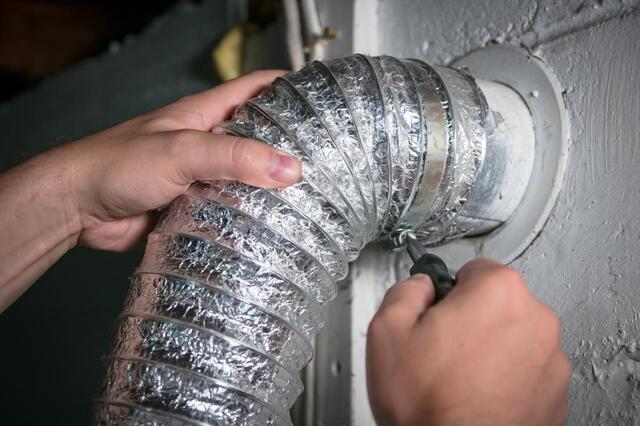
Dryer Vents: An Often Overlooked IAQ Component
If a homeowner has their dryer vents on their radar for regular cleaning, it’s almost always for mechanical reasons alone. That makes sense. A clogged dryer vent won’t exhaust moisture properly, and damp clothes are often the first noticeable sign. Not to mention, safety-minded homeowners also correctly associate dryer vent cleaning with reducing the risk of household fires.
Those are both important reasons not to overlook this hidden service item, but there’s another, less understood one.
Every time your dryer runs, it pushes a mixture of warm air, moisture, and fine particulate matter outside the home. When the vent becomes restricted or partially blocked, that air doesn’t move the way it should—and some of what’s meant to exit the home ends up lingering in the system or being reintroduced indoors.
One of the biggest impacts a restricted dryer vent can have on the indoor environment is added humidity. Moisture levels are one of the most influential drivers of indoor air quality. Beyond contributing to odors, elevated humidity can create conditions that support microbial growth.
Some Concerning Perspective on Lint
A lot of people assume the dryer filter captures everything harmful. The reality is it only captures what you can see. That’s why a clear, unrestricted vent path is so important for what still needs to be exhausted.
Tiny textile fibers, dust, and debris can escape the filter and become airborne, especially when airflow is restricted. When that happens, those particles don’t just disappear—they move through the home’s air and circulation patterns.
What we typically see in the field is that these particles eventually settle into the same places dust already collects: carpets, upholstered furniture, mattresses, drapes, and other soft surfaces. Those materials tend to hold onto fine particulate matter and release it back into the air with normal household activity.
Over time, that adds to the overall particulate load inside the home. It’s not always visible, but it contributes to the day-to-day indoor air environment.
This is one of the reasons we put such a strong emphasis on soft surface cleaning as part of a broader indoor air quality strategy. Clean air and clean surfaces go hand in hand. Reducing what’s in the air while also addressing what’s already settled in the home helps create a noticeably healthier environment overall.
Homes with carpet and upholstered furniture already act as reservoirs for dust and allergens. When dryer vents are restricted, you’re simply adding to that overall load of fine particulates in the home.
Why Dryer Vents Matter More Than People Think
As vents become restricted, dryers also have to work harder and run longer to get the same results. That means more energy use, more heat, and more moisture being introduced into the indoor environment.
Most homeowners don’t immediately connect dryer vent cleaning with indoor air quality—and that’s understandable. It’s usually thought of as an appliance maintenance issue, not an IAQ issue.
But it absolutely plays a role in the bigger picture of how air moves, what gets exhausted, and what ends up staying inside the home.
PCRS And The Whole Home Approach
At PCRS, we believe creating the Cleanest, Healthiest, Most Comfortable Homes Possible requires looking beyond the obvious. Indoor air quality is influenced by a number of interconnected factors, including moisture control, air filtration, soft surface cleaning, mold prevention, and yes—even the condition of your dryer vent.
When these systems are working together, homeowners benefit from a cleaner, healthier, and more comfortable living space for their families. When one piece is neglected, it can impact the performance of the entire indoor environment.
The good news is that when everything is addressed as part of a whole home approach, the result is exactly what we strive to deliver every day: “The Cleanest, Healthiest, Most Comfortable Homes Possible.”