Water Loss to Mold Growth: Why Immediate Response Matters
PCRS is open 24 hours a day, 7 days a week, and 365 days a year.
When we say we’re always open, we really mean it.
Emergencies don’t take days off or celebrate holidays with their families, and when a restoration emergency occurs we know how important it is to have a trusted service provider answer the phone when you need them most.
In our industry we know what water does to a home when it’s not immediately addressed - and the implications can be serious. This can be particularly problematic if a homeowner is away for an extended period of time before the loss is discovered.
In this post we hope to illuminate what can happen to your home while you are away and how important it is to address water loss as soon as possible.
Hour One: Initial Saturation Begins
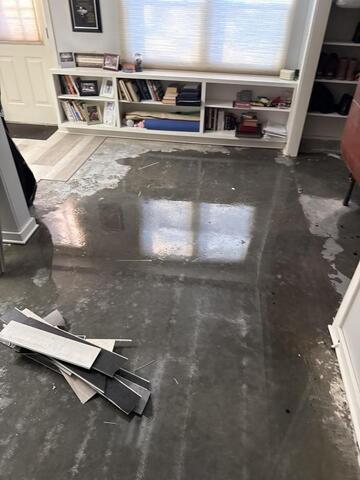
Water spreads quickly across flooring, soaks into subfloors and materials close to the source of the loss.
Hours 2-6: Water Migration Hidden From View
This is where the loss begins to escalate. Water doesn’t stay put like an obedient pet. Water goes where it wants to.
In our industry we call the process of water traveling upward or sideways through porous materials wicking. Think of a paper towel pulling moisture up from a spill. Porous materials like drywall, wood trim, insulation, carpets and carpet pad, draw moisture away from where the loss began driven by capillary action. This is the same principle that draws moisture into a sponge. At this stage, much of the damage is happening out of sight.
Hours 6-12 Structural Materials Begin to Change
This is where things get more problematic. Drywall begins to weaken around this time, and lose it’s rigidity. Wood starts to swell with absorbed moisture. If there’s carpet and pad present these are most certainly saturated, heavy, and begin to smell. At this point, microbial activity may not have started yet but rest assured, it’s on the way.
Hours 12-24
We call this the critical window, a real turning point for the worse after a water loss. Visible mold growth may not yet be present, but the environment is now ideal for microbial reproduction. Moisture, warmth, and organic materials combine to create perfect conditions.
As odors begin to get stronger the air quality inside rapidly declines.
Many homeowners assume that because the standing water has been removed the damage is finished. In reality, water continues moving through building materials long after visible water is gone. This is the phase where hidden damage accelerates behind walls, under flooring, and within cavities inside the structure
Hours 24-48…and beyond
IF water has not been properly extracted and drying has not started, materials begin to break down even more aggressively. Drywall will begin to crumble, wood trim, cabinetry, and hardwood flooring continues to swell, warp and distort. What began as a localized water loss now spreads deep into the structure.
At this stage in the game, mold no longer becomes a potential risk and more of an active concern. We know that mold spores are always present in indoor environments, but they only require moisture, organic materials, and time to begin colonizing building materials. The loss experienced in a home provides mold spores with all of the above.
Odors intensify significantly during this stage and the indoor environment becomes less habitable, especially for at risk individuals with allergies, asthma, or other respiratory sensitivities.
By 48 hours and afterwards, restoration complexity and cost typically rise dramatically and materials that may have been salvageable early on, often require removal and replacement.
Why Immediate Response Matters and What to Do When You’ve Just Found It
The reality behind water damage is actually pretty simple: Time changes everything
What starts as “simple” water damage turns into a much bigger issue depending on how long it sits and how far it’s had time to move. The first window of a loss often presents the best opportunity for materials to be saved and the least disruption happens.
In the real world every situation is not caught right away. When that happens you need a restoration company that understands what water does over time, not just what it looks like on the surface.
Whether the loss just happened, or you just discovered it, our goal is the same: Get in, determine what’s wet, stop the spread of moisture, and begin the drying process right away to prevent secondary damage and mold growth.
At the end of the day restoration isn’t about cleaning up water, it’s about restoring your home. Restoration, the PCRS way is about returning your home to you with as little disruption as possible.
In the event that you experience a water loss, whether the discovery is immediate or delayed, you want to hire a company that knows the science behind water damage restoration. You want a company who returns homes to their clients cleaner, healthier, and more comfortable than before the loss occurred.