When Insurance Won't Cover the Damage: What Homeowners Should Do Next
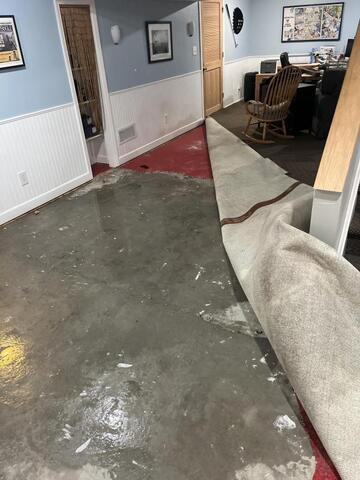
Back in the summer of 2024 the state of CT. was hit with a historic rainfall event which dropped up to 14 inches of rain on parts of the state in a single afternoon. Basements that were historically dry began to take on water or completely flood, leaving many homeowners with an unexpected mess on their hands.
Naturally, many homeowners immediately reached for their insurance policies, expecting the damage to be covered. Unfortunately, many were met with an unpleasant surprise.
Groundwater intrusion is generally not covered under a standard homeowners insurance policy. Unless you carry flood insurance or have specific endorsements that apply to the loss, water entering the home from outside is often excluded from coverage. While the source of the water determines whether or not a loss is covered, it does not change what the water is capable of doing once inside your home.
Emergency pumping, removal of unsalvageable materials, professional structural drying, dehumidification, and antimicrobial treatment can quickly become expensive, particularly
when a large portion of the home is affected.
For many families the question becomes: “What do we do now?”
The First Phone Call Matters
When you're facing an uncovered loss, it's natural to focus on the financial side of the equation. But before you decide who you're going to call and how to pay for the restoration, it's important to make sure you're receiving the right advice.
We’ve seen first hand how expensive the wrong advice can be. Not every wet carpet needs to be discarded, not every piece of drywall needs to be removed, and it’s rare that a groundwater loss would require a full cut and gut mentality.
The first priority is evaluating the extent of the damage and identifying what can realistically be saved using IICRC standard drying teqniques.
A restoration-first approach can often restore flooring, drywall, trim or other building materials that are still structurally sound. Sometimes removal is the only responsible option, the difference an IICRC trained restoration professional brings to a job is that these decisions are based on evidence not assumptions.
Whether your loss is covered by insurance or not, we approach the work the same way: Restore as much of your home as possible while avoiding unnecessary expenses.
Preventing Further Damage: Water Doesn’t Wait
Once you’ve determined that a loss will be an out of pocket expense, it can be tempting to place the restoration work on hold while you make decisions. Unfortunately, water doesn’t wait. Moisture will continue to migrate through building materials and wet carpet and padding trap humidity. Left unchecked, conditions can quickly become favorable for microbial growth making an already expensive mitigation evolve into a large remediation project.
Once the affected materials have been stabilized and the structure has reached the dry standard of the materials contained inside, repairs and reconstruction can be made with less urgency. By focusing on preventing additional damage, homeowners can often preserve more of their home and avoid repairs that become significantly more expensive.
Remember, you have options
Having a clear understanding of what needs to happen in your home after a water loss and why, is the key to avoiding unnecessary expenses. If a contractor wants to remove materials or charge for additional days of drying time, it’s completely within your authority to have them explain why. Every decision should be backed with an explanation of their reasoning and the evidence to support it.
Restoration is not guesswork. Building science determines what must happen after every loss, not assumptions. Experienced, IICRC-trained restoration professionals should be able to explain what can be saved, what can’t, and why. When you’re paying out of pocket, understanding your options gives you the confidence to make informed decisions that protect both your home and your budget.
Don’t Let Cost Delay Action
The reality is that an uncovered loss can be overwhelming to homeowners. While cost is an important consideration, delaying necessary drying and mitigation often allows the damage to become more extensive.
When faced with an uncovered loss it may be worth asking what payment options are available. Having an established financing program may actually be a sign that the contractor you're working with has encountered these situations before and recognizes that homeowners sometimes need flexible solutions to move forward.
The important factor is not to let financial uncertainty prevent you from taking action. Addressing the damage promptly gives you the best opportunity to protect your home, preserve more of the affected materials, and avoid more costly repairs later.
We’re Here to Help
Along with my brother, Curtis, Professional Cleaning and Restoration Systems has been helping Connecticut homeowners for nearly 40 years. Whether your loss is covered, falls below your deductible, or is entirely out of pocket, our approach is the same: evaluate the damage, preserve as much of your home as possible, and recommend only the work that is truly necessary.
We understand that every situation is different and that an unexpected water loss in your home can present a significant financial burden on a family. This is why PCRS also offers financing options to qualified homeowners, without delaying mitigation.
If you’ve experienced a water loss and aren’t sure what to do next, we're here to answer your questions, explain your options and help you make informed decisions that protect both your home and budget.