How Home Fragrances Affect Indoor Air Quality
How Home Fragrances Affect Indoor Air Quality
At Professional Cleaning and Restoration Systems we understand that there is a significant difference between covering up an odor and addressing its source. In stores all over the country there are scented candles, air fresheners, sprays, and diffusers all marketed to homeowners to help keep our homes smelling good. And we admit - some of them do add pleasant fragrances in a home.
Where this becomes problematic is when these fragrances become a substitute for cleanliness and are used to mask odors. Even more important, many of these products can introduce pollutants into the air, including VOCs (volatile organic compounds).
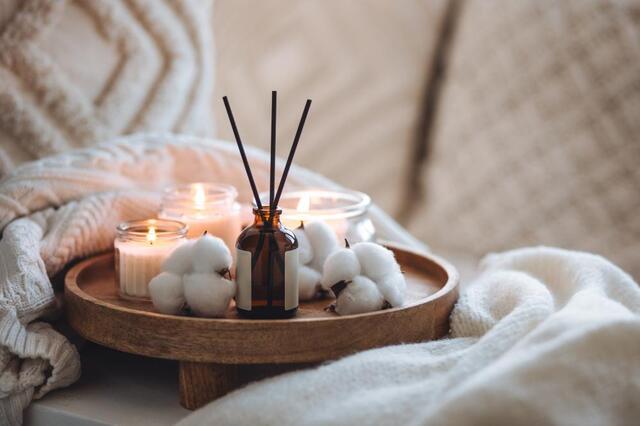
Candles, for example, are a combustion source and can add to PM readings while they burn, with the potential to introduce additional particulate matter when they are extinguished. If you’ve ever blown out a candle and noticed the plume of smoke rising from the wick, you are actually watching combustion products enter the room. The smoldering wick can also release particulate matter into the air after the flame itself is gone and, depending on the candle, wick, flame conditions, and ventilation, candle burning can generate fine and ultrafine particulate matter.
Air fresheners and fragrance diffusers don’t need a flame to affect the air. Many of them present a different issue in the form of VOCs, which can include compounds known as terpenes that produce familiar scents like pine and citrus. Once released, these compounds become part of the mixture of gases in our indoor air. Certain terpenes can also react with ozone that enters the home from outdoors, potentially producing additional compounds and secondary particulate matter.
Clean, healthy, and comfortable homes consist of far more than introducing fragrance. They are maintained from the ground up to eliminate the need to mask existing issues. This points us back to the important distinction between a home that smells clean and one which actually addresses indoor air quality concerns and demonstrates how the Whole Home Approach is fundamentally different from other cleaning methods.
The cleanest, healthiest, most comfortable homes require looking deeper than just what’s on the surface. A fragrance can change our perception of a space, but at the end of the day it’s simply a costume to hide what’s actually happening inside your home.
True cleanliness comes from identifying those sources, removing the contaminants we can, and controlling the conditions that affect the indoor environment. Instead of asking, “How do we make our home smell better?” we encourage our clients to ask, “Why does my home smell like this in the first place?”
At PCRS we are investigators and cleaners in equal parts. One of the first things we look at is the humidity in a home because it plays such an important role in how a home smells. When excess moisture creates favorable conditions for microbial growth, that growth itself can become a source of odor. Microorganisms such as mold and fungi can release microbial volatile organic compounds (mVOCs) as part of their metabolic processes. Some of these compounds contribute to the familiar musty or earthy smells we often associate with damp basements and other moisture-prone areas.
That odor is important because covering it with an air freshener will not address why it's there. A persistent musty smell is instead a reason to investigate the home for excess moisture and determine whether conditions favorable for microbial growth exist.
Soft surface cleaning is a necessary component of reducing and addressing odors. Carpets, upholstery, area rugs, and mattresses are different from hard surfaces because they can’t simply be wiped clean. The fabric that makes up these soft surfaces is porous and over time will collect pet dander, cooking residue, body oils, smoke particles, and microbial debris.
Simply introducing a pleasant fragrance into a room will not remove any of the material that actually causes the odor. Even routine vacuuming, while important, cannot remove everything that becomes embedded in the fibers of your carpets and upholstery.
Professional soft surface cleaning goes deeper by physically removing accumulated soils and contaminants from these materials. Instead of trying to make a carpet or piece of furniture smell clean, the goal is to remove the materials contributing to the odor in the first place. Professional cleaning achieves just that.
The HVAC system is another area that may warrant investigation when trying to identify the source of a persistent odor. Because ductwork distributes conditioned air throughout the home, contaminants or odor sources within the system can potentially affect multiple areas. This doesn't mean every odor problem requires duct cleaning. Instead, the system should be inspected to determine whether accumulated debris, microbial growth, pest contamination, or another condition is contributing to the problem.
Identifying sources also means looking at places where there have been previous issues. If a home has experienced a water loss at some point in the past, it makes sense to investigate whether the area is still suffering from water intrusion or if there are wet materials remaining in the area. Materials that remain damp, or that developed microbial growth following a previous loss, can become a persistent source of odor long after the original event occurred.
Address the Source, Not Just the Smell
There is nothing wrong with enjoying a fragrance that you like. The problem is when fragrance becomes our solution to an odor rather than asking why that odor exists in the first place.
Lighting a candle, spraying an air freshener, or plugging in a fragrance does not remove microbial debris, clean a contaminated carpet, lower the humidity in a damp basement, dry wet building materials, or correct an odor source within the home. It simply changes what we smell. At the same time, these products can introduce additional compounds into the indoor environment. Burning candles can directly contribute to the particulate matter load inside a home, while non-combustion fragrance products can introduce VOCs and, under certain conditions, contribute to the formation of secondary particulate matter.
That creates an interesting contradiction: in an attempt to make our homes seem cleaner, we may actually be adding more particulates to the air.
The Whole Home Approach works in the opposite direction. Rather than adding fragrance to approximate cleanliness, we look for opportunities to remove contaminants, control moisture, clean the surfaces that hold accumulated material, and address the underlying conditions responsible for persistent odors.
A pleasant fragrance can certainly be something we enjoy in our homes. It just shouldn't be what we rely on to make them clean.
Don't just cover the odor. Find out why it's there.